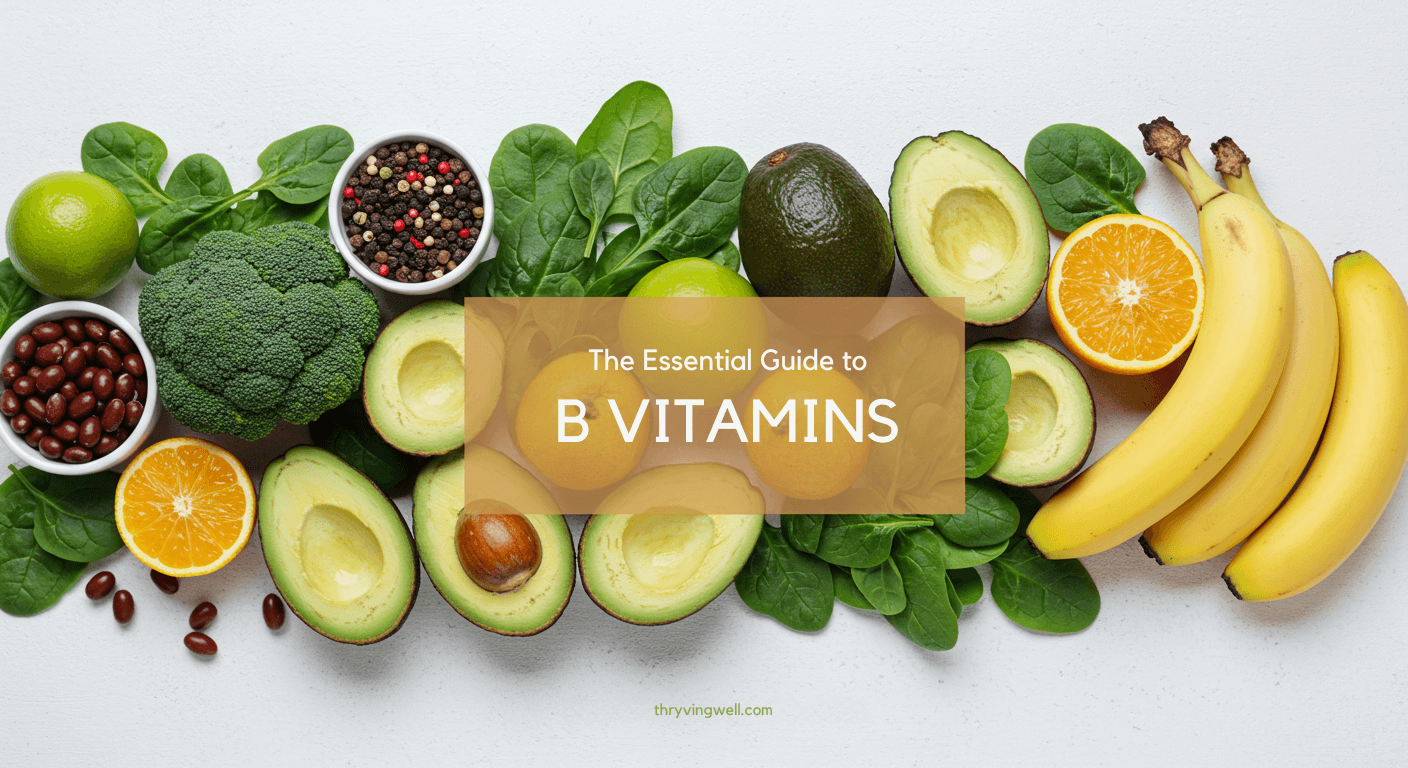
Are you curious about the buzz surrounding B vitamins? These powerful nutrients play a crucial role in keeping our bodies running smoothly.
In this essential B vitamins guide, we’ll explore the different types of B vitamins and their amazing benefits for your health. Let’s dive in and discover how these vitamins can boost your well-being!
What Are B Vitamins?
B vitamins are a group of eight essential nutrients that help our bodies function properly. They’re like tiny superheroes working behind the scenes to keep us healthy and energized.
These vitamins are water-soluble, which means our bodies don’t store them, so we need to get them regularly through our diet or supplements.
The 8 B Vitamins and Their Benefits
B1 (Thiamine): The Energy Booster
Benefits:
- Helps turn food into energy
- Supports healthy nerves and muscles
- Keeps your heart working well
Food sources: Whole grains, nuts, seeds, pork, and beans [1]
B2 (Riboflavin): The Cell Protector
Benefits:
- Helps produce energy in your body
- Acts as an antioxidant, protecting your cells
- Keeps your skin, eyes, and blood healthy
Food sources: Dairy products, lean meats, leafy green vegetables, and almonds [2]
B3 (Niacin): The Heart Helper
Benefits:
- Supports energy production
- Helps lower cholesterol levels
- Promotes healthy skin and digestion
Food sources: Fish, chicken, peanuts, whole grains, and beans [3]
B5 (Pantothenic Acid): The Metabolism Supporter
Benefits:
- Helps your body use fats, proteins, and carbs
- Supports hormone production
- Keeps your skin and hair healthy
Food sources: Avocados, chicken, whole grains, and mushrooms [4]
B6 (Pyridoxine): The Brain Booster
Benefits:
- Supports brain health and mood
- Helps your body use proteins, fats, and carbs
- Involved in over 100 important body processes
Food sources: Bananas, potatoes, chicken, fish, and chickpeas [5]
B7 (Biotin): The Beauty Vitamin
Benefits:
- Promotes healthy hair, skin, and nails
- Helps your body use energy from food
- Supports blood sugar regulation
Food sources: Eggs, nuts, seeds, sweet potatoes, and salmon [6]
B9 (Folate or Folic Acid): The Cell Builder
Benefits:
- Essential for making new cells in your body
- Helps form healthy red blood cells
- Supports brain health and mood
- Very important during pregnancy for baby’s development
Food sources: Leafy green vegetables, citrus fruits, beans, and fortified grains [7]
B12 (Cobalamin): The Nerve Protector
Benefits:
- Keeps your nerves healthy
- Helps make red blood cells
- Supports brain function and memory
Food sources: Meat, fish, eggs, dairy, and fortified foods for vegetarians and vegans [8]
Why Are B Vitamins Important?
B vitamins work together to keep your body running smoothly. They help:
- Turn food into energy
- Keep your brain and nerves healthy
- Make new blood cells
- Support a healthy heart
- Maintain good skin, hair, and nails
How to Get Enough B Vitamins
The best way to get B vitamins is through a balanced diet. Try to include a variety of foods like:
- Fruits and vegetables
- Whole grains
- Lean meats and fish
- Dairy products (or fortified plant-based alternatives)
- Nuts and seeds
Some people might need extra B vitamins, especially:
- Older adults
- Vegetarians and vegans
- People with certain health conditions
If you think you might need more B vitamins, talk to your doctor or a registered dietitian. They can help you decide if supplements are right for you.
Conclusion
B vitamins are essential for keeping your body healthy and energized. By eating a balanced diet rich in B vitamin sources, you can support your overall health and well-being.
Remember, these vitamins work best as a team, so aim for a variety of B vitamin-rich foods in your diet. If you have concerns about your B vitamin intake, don’t hesitate to consult with a healthcare professional for personalized advice.
References:
[1] National Institutes of Health. (2021). Thiamin – Fact Sheet for Health Professionals.
[2] National Institutes of Health. (2021). Riboflavin – Fact Sheet for Health Professionals.
[3] National Institutes of Health. (2021). Niacin – Fact Sheet for Health Professionals.
[4] National Institutes of Health. (2021). Pantothenic Acid – Fact Sheet for Health Professionals.
[5] National Institutes of Health. (2021). Vitamin B6 – Fact Sheet for Health Professionals.
[6] National Institutes of Health. (2021). Biotin – Fact Sheet for Health Professionals.
[7] National Institutes of Health. (2021). Folate – Fact Sheet for Health Professionals.
[8] National Institutes of Health. (2021). Vitamin B12 – Fact Sheet for Health Professionals.